
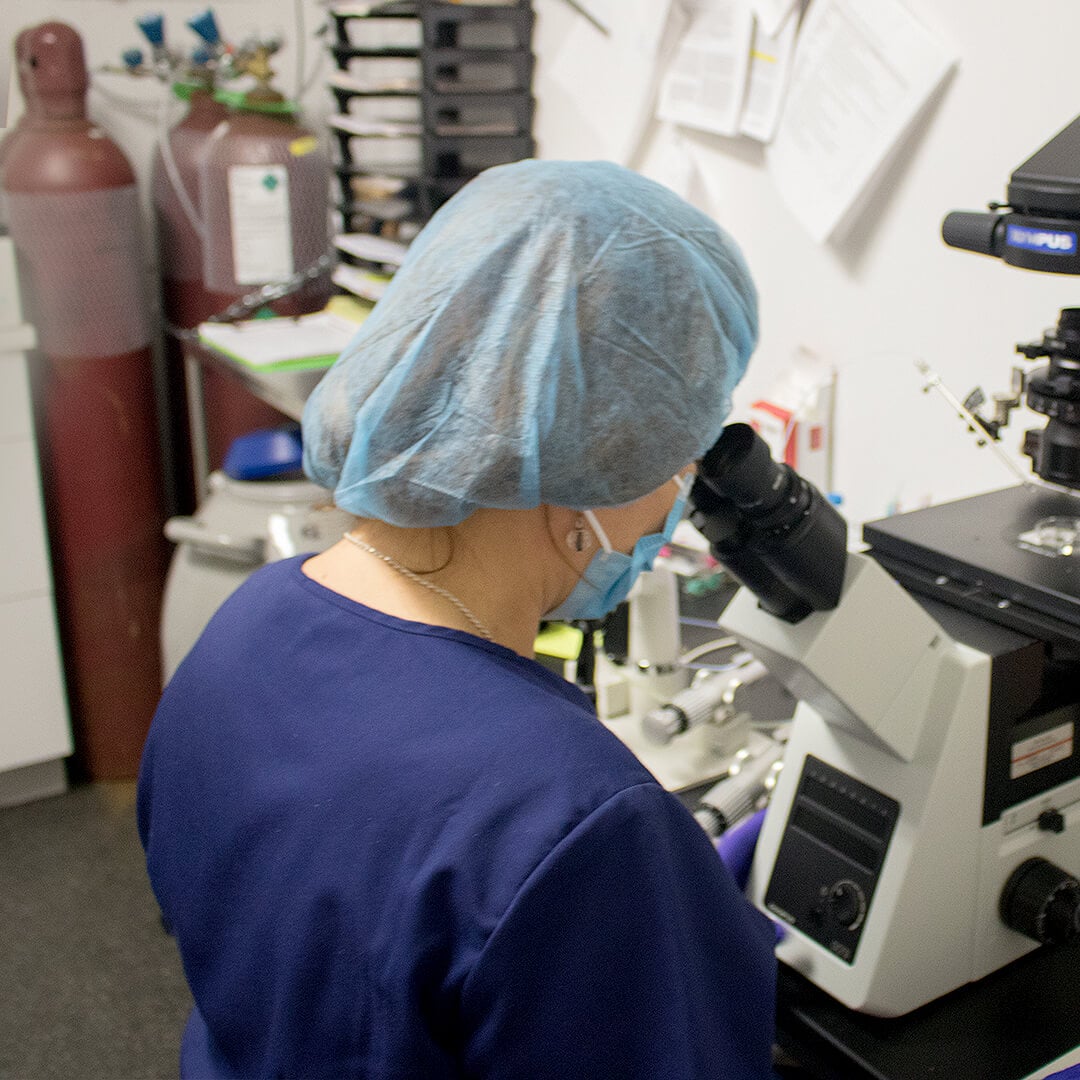
A frozen embryo transfer, or FET, is the step where an embryo that was created and frozen in an earlier cycle is warmed and placed into the uterus. It is a separate, much simpler procedure than the IVF cycle that produced the embryo — no stimulation medication to grow eggs, no retrieval, no anesthesia. For most patients it is a short appointment.
Why so many IVF cycles now end in a freeze
For most of the history of IVF, embryos were transferred a few days after retrieval, in the same cycle — a fresh transfer. Today a large share of cycles are deliberately planned as freeze-all cycles, where every suitable embryo is vitrified and the transfer happens in a later month.
Three things drove that change. Vitrification, the rapid-freezing method now used, replaced slower freezing techniques and made embryo survival through freezing and warming routine. Preimplantation genetic testing takes days to return a result, which means an embryo biopsied for PGT-A or PGT-M has to be frozen while the laboratory reports. And separating the transfer from the stimulation cycle means the embryo is placed into a uterus that has not just been through ovarian stimulation.
A frozen transfer is not a consolation prize or a second attempt. In a planned freeze-all cycle it is the intended endpoint from the start.
What an FET cycle involves
An FET cycle is built around preparing the uterine lining rather than growing eggs. The sequence is:
- Preparation of the uterine lining, either with hormone medication or by tracking your own ovulatory cycle
- Monitoring by ultrasound and bloodwork to confirm the lining has responded and to time the transfer
- Warming of the selected embryo in the laboratory on the day of transfer
- Transfer of the embryo into the uterus through the cervix with a soft catheter, under ultrasound guidance — a procedure similar to IUI, taking a few minutes and needing no anesthesia
- Hormone support of the uterine lining to implant and sustain a pregnancy
- A pregnancy test roughly nine to eleven days after the transfer
Which embryo is transferred, and how many, is decided with your physician before the day of transfer.
The warming is done in our on-site laboratory, which holds accreditation from the College of American Pathologists (CAP), by embryologists based on site.
Medicated or natural cycle
There are two broad ways to prepare for a transfer. A medicated, or programmed, cycle uses estrogen and progesterone to build and then support the lining, which gives precise control over the transfer date. A natural-cycle transfer tracks your own ovulation and times the transfer to it, using less medication.
Neither is universally better. The choice depends on whether you ovulate predictably, how your lining has responded before, what your schedule allows, and your physician's assessment of your history. Your physician will tell you which approach they recommend for you and why.
How long it takes
An FET cycle is considerably shorter and lighter than the cycle that produced the embryo. Preparation and monitoring generally run across a few weeks within a single menstrual cycle, with monitoring visits in the early morning and the transfer itself taking a few minutes.
For comparison: an IUI cycle, and an IVF cycle ending in a fresh transfer, both track roughly a full menstrual cycle — about a month. A freeze-all IVF cycle or an egg freezing cycle runs about two to three weeks, depending on your protocol. See the IVF process, step by step for the full sequence.
What it costs
A frozen embryo transfer at Chelsea Fertility NYC is $4,000. That covers the transfer cycle itself — lining preparation monitoring, embryo warming and the transfer procedure.
Billed separately: medications, through a specialty pharmacy; preimplantation genetic testing, where it is used; and long-term embryo storage, which runs $1,000 to $1,500 per year depending on the package length. Our full published fee schedule is on the cost and pricing page.
Insurance treats a transfer differently from a full IVF cycle, and a plan that covers IVF cycles may count a frozen transfer against that allowance or may not. Our financial coordinator verifies your benefits and gives you a written itemized estimate before you begin — see fertility insurance coverage.
Embryos you do not transfer
Quality embryos that are not transferred can stay cryopreserved for future use. There is no established time limit on storage — the storage temperature essentially halts biological aging, and vitrified embryos have been warmed and used successfully many years after freezing.
Storage is billed annually and separately from the transfer fee. If you later decide not to use stored embryos, you control what happens to them and can change your directive at any time. Those options and their legal requirements are worth discussing with your physician before you need to decide.
If a transfer did not work before
A transfer that does not result in a pregnancy, or a pregnancy that is lost, is worth examining rather than simply repeating. Dr. Gindoff has written about what he looks at differently after a failed IVF cycle, and we see patients specifically for a fertility second opinion on embryos created elsewhere.
Common questions
Is a frozen embryo transfer as successful as a fresh transfer?
Vitrification made embryo survival through freezing and warming routine, and a planned frozen transfer is now a standard intended endpoint rather than a fallback. Outcomes in any individual case depend on embryo quality and the age at which the eggs were retrieved, which are intrinsic to the embryo rather than to the timing of the transfer. Your physician will discuss your own prognosis based on your full evaluation.
Does a frozen embryo transfer need anesthesia?
No. The transfer is done through the cervix with a soft catheter under ultrasound guidance, takes a few minutes, and does not require anesthesia or sedation.
How much does a frozen embryo transfer cost?
A frozen embryo transfer at Chelsea Fertility NYC is $4,000, covering the transfer cycle itself. Medications, preimplantation genetic testing and long-term embryo storage are billed separately. Our financial coordinator gives you a written itemized estimate before you begin.
How long can embryos stay frozen?
There is no established time limit. Storage in liquid nitrogen essentially halts biological aging, and vitrified embryos have been warmed and used successfully many years after freezing. Storage is billed annually and separately from the transfer fee.
Can I use embryos that were created at another clinic?
Embryos can be transported between clinics, subject to the storing facility's requirements and the relevant consents. If you have embryos stored elsewhere, bring the details to a consultation and we will tell you what the transfer would involve.
Book an appointment
Consultation is free for new patients; we bill health insurance where you have coverage that applies.