
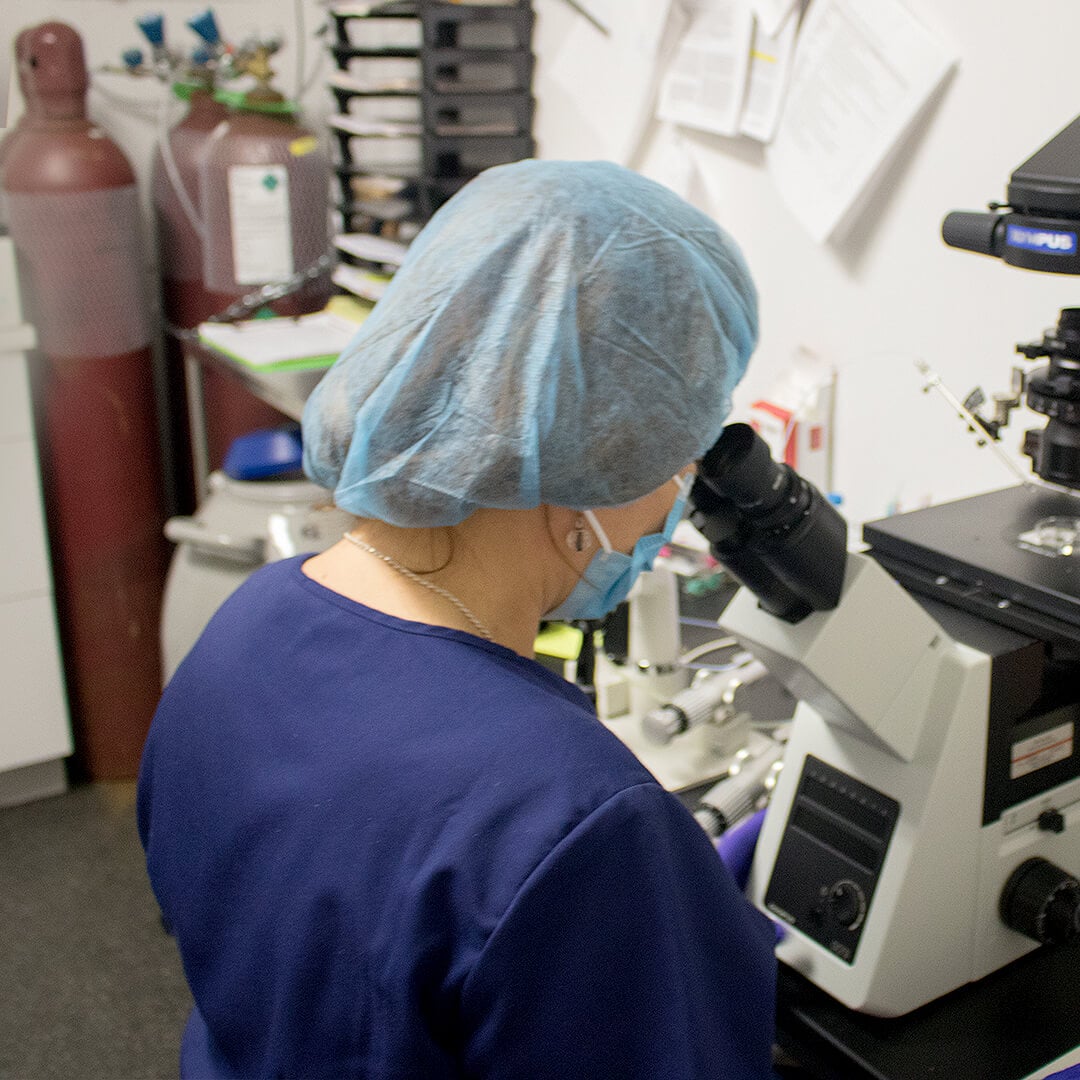
ICSI, or intracytoplasmic sperm injection, is a laboratory step within an IVF cycle. Instead of placing eggs and sperm together and letting fertilization happen on its own, an embryologist injects a single sperm directly into each mature egg.
It is not a separate treatment and not an alternative to IVF. It is a decision made about how the eggs are fertilized once they have been retrieved.
What ICSI is
ICSI is the great equalizer for male factor infertility and allows for optimization of egg fertilization. ICSI, or intracytoplasmic sperm injection is a technique that injects the sperm into the egg. Its use came of age in the late 1990s and has been considered one of the landmark breakthroughs in fertility treatment. Sperm used in the ICSI technique can be freshly ejaculated or frozen and thawed without any compromise in efficacy. ICSI is so powerful that even men without sperm in their ejaculate or very low numbers can have children using this procedure once the sperm is surgically harvested directly from the testes or vas deferens.
In practice, an embryologist immobilizes one sperm, draws it into a fine glass needle and injects it directly into the cytoplasm of a mature egg, working under a microscope with micromanipulation instruments. This is done in our on-site laboratory, which holds accreditation from the College of American Pathologists (CAP), by embryologists based on site.
When ICSI is used
ICSI is used for significant male-factor infertility, prior fertilization failure, and when using surgically retrieved sperm. In our practice we may also recommend it without a male-factor indication, because it ensures the sperm penetrates the egg and prevents polyspermy, which reduces the chance of an abnormal chromosome count.
Two other situations call for it routinely. Eggs that have been frozen and thawed are fertilized with ICSI, which is why it applies to anyone returning to use frozen eggs and to cycles using frozen donor eggs. And where embryos will undergo preimplantation genetic testing, ICSI is used so that no extra sperm remain attached to the outside of the egg, where they could contaminate the genetic result.
When it is not used
Although ICSI is not necessary for all IVF cases, it is often recommended to improve fertilization rates especially when egg yield is compromised. Standard conventional IVF (without ICSI) is certainly an option for patients, and the decision to perform ICSI will be made as part of an informed process between you and your doctor at Chelsea Fertility NYC. Please note that ICSI per se does not increase the risk over non-ICSI standard IVF for children born with these procedures as compared to infertility patients in general.
What ICSI does not do
ICSI addresses one specific question: whether a sperm gets inside the egg. It does not improve the quality of the egg, and it cannot make a mature egg out of an immature one.
That distinction matters when you are reading about fertilization rates. If the limiting factor in a previous cycle was egg quality rather than fertilization, ICSI is not the lever that changes the outcome — which is exactly the kind of thing worth establishing before planning another cycle. Dr. Gindoff has written about what he reviews after a failed IVF cycle.
What it costs here
ICSI is included in our IVF cycle fee. Our self-pay cycle fees are $8,900 for a natural or minimal stimulation cycle and $13,900 for a standard stimulation cycle, each of which includes ICSI.
That is worth checking when you compare quotes, because ICSI is commonly quoted as a separate line item. When you are comparing one clinic's cycle fee against another's, confirm what each figure includes before treating them as the same number. Our full published fee schedule is on the cost and pricing page, and how our pricing is structured sets out what is and is not included.
Common questions
Is ICSI included in the IVF cycle fee?
Yes. Our self-pay IVF cycle fees are $8,900 for a natural or minimal stimulation cycle and $13,900 for a standard stimulation cycle, and each includes ICSI. Medications, preimplantation genetic testing and long-term storage are billed separately.
Do I need ICSI?
Not everyone does. ICSI is used for significant male-factor infertility, prior fertilization failure, and when using surgically retrieved sperm, and it is routine for frozen and thawed eggs and for cycles with genetic testing. Standard conventional IVF without ICSI is an option, and the decision is made as part of an informed process between you and your physician.
Does ICSI increase risks for the child?
ICSI per se does not increase the risk over non-ICSI standard IVF for children born with these procedures as compared to infertility patients in general.
Does ICSI improve egg quality?
No. ICSI determines whether a sperm gets inside the egg. It does not change the quality of the egg itself, which is why a previous cycle that failed on egg quality rather than on fertilization will not necessarily be improved by adding ICSI.
Can ICSI be used with frozen sperm, or sperm retrieved surgically?
Yes. Sperm used in the ICSI technique can be freshly ejaculated or frozen and thawed without any compromise in efficacy. It also works with sperm harvested surgically from the testes or vas deferens, which is what allows men with very low counts or no sperm in the ejaculate to have biological children.
Your initial consultation is free for all new patients, and we bill health insurance where you have coverage that applies. Call 212-685-2229 or send us a message to arrange a visit.
Book an appointment
Consultation is free for new patients; we bill health insurance where you have coverage that applies.