
In reciprocal IVF (sometimes called co-IVF or shared motherhood), one partner provides the eggs through an IVF retrieval, the eggs are fertilized with donor sperm, and the resulting embryo is transferred to the other partner, who carries the pregnancy. Both partners participate biologically in family building. Many couples find the process deeply meaningful.
Medically it is an IVF cycle split across two people. That changes the planning more than it changes the procedures, and it is the planning that this page is about.
How the two halves fit together
The partner providing the eggs goes through the first half of a standard IVF cycle: injections to grow multiple follicles, monitoring by ultrasound and bloodwork, then an egg retrieval under sedation.
The eggs are fertilized in the laboratory with donor sperm. The partner carrying the pregnancy has her uterine lining prepared, and an embryo is transferred into her uterus — a short procedure through the cervix, needing no anesthesia. Her pregnancy care then proceeds as in any IVF cycle.
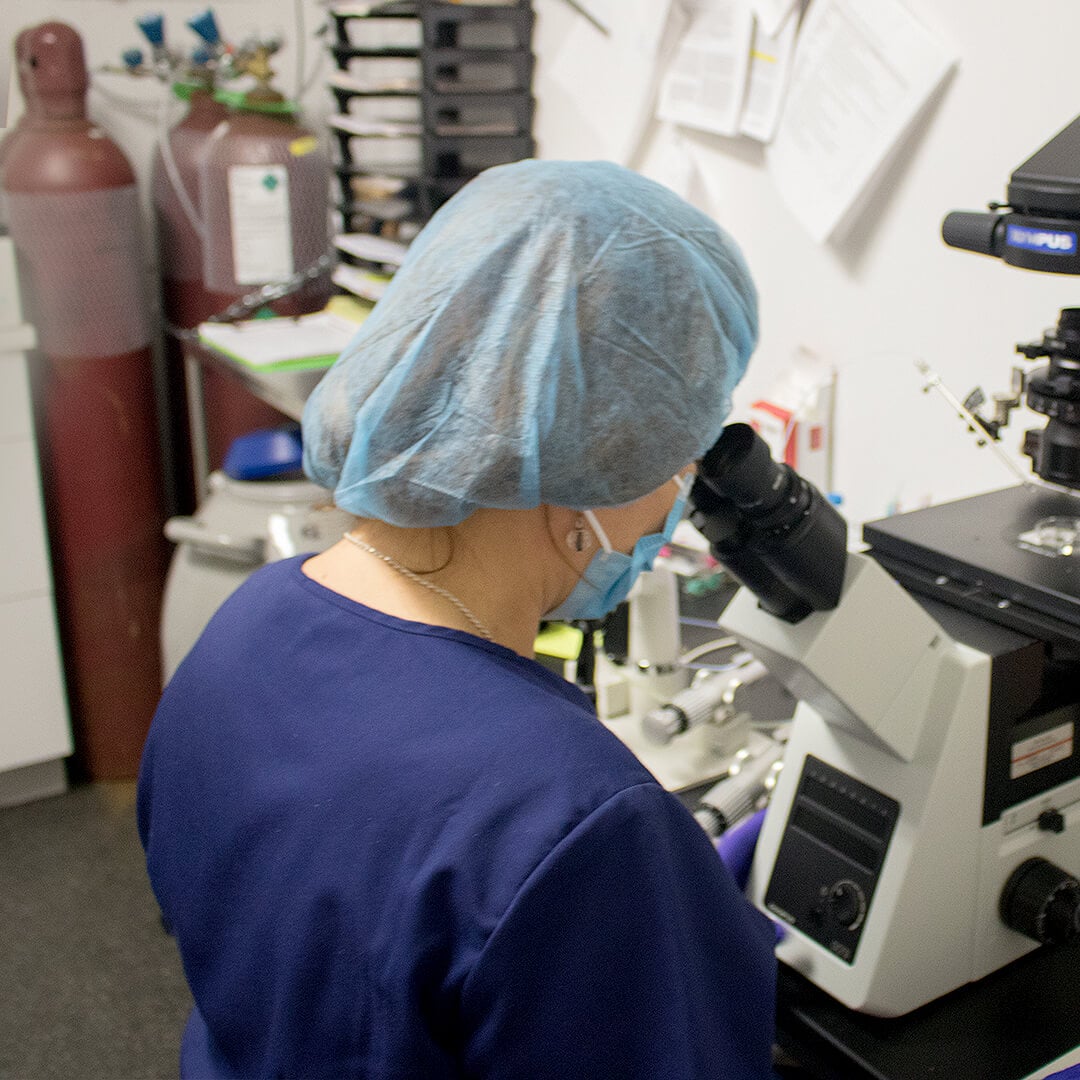
Both halves happen in our on-site laboratory, which holds accreditation from the College of American Pathologists (CAP), by embryologists based on site.
The Chelsea Fertility NYC Egg Exchange Program
In the spirit of “all you need is love”, the Chelsea Fertility NYC Egg Exchange program offers a unique and affordable opportunity for both members of a lesbian couple to participate in the extraordinary experience of having a baby. In this modern family building solution, one woman provides the eggs and her partner is implanted with the embryo. The program is particularly effective when the egg quality of the woman who will carry the baby is not optimal (with her partner providing the eggs in her place). The fertilized embryos are then implanted with the use of “mini IVF” or modified natural cycle IVF, minimizing medical intervention and reducing the overall cost.
That is the named program under which reciprocal IVF is offered here, and natural cycle and minimal stimulation IVF is what keeps its cost down relative to a standard stimulation cycle.
Deciding who does which part
Most couples arrive with an instinct about this, and it is worth testing that instinct against the evaluation rather than the other way round.
The relevant findings are different for each role. For the partner providing eggs, AMH, antral follicle count and day-3 bloodwork indicate how she is likely to respond to stimulation, and her age at retrieval is what carries the egg-quality question. For the partner carrying, the assessment is of the uterus and the cycle rather than the ovaries.
It is common for the medical picture to point one way and personal preference another. Both partners are evaluated before that conversation happens, so it is an informed decision rather than a guess — see fertility testing and diagnosis. Which arrangement is medically appropriate is determined by the treating physician.
Age difference between partners is often the deciding factor, and it is not always in the direction people expect. The older partner can carry while the younger provides eggs; the two roles do not have to go together.
Donor sperm
Donor sperm comes either from a licensed sperm bank or from someone you know. Sperm from a licensed bank is screened and quarantined under FDA requirements before release, and banks differ in how much donor information they make available — some offer identity-release programs where a child can obtain the donor's identity at adulthood, others do not.
Using a known donor is possible and involves additional screening, quarantine and legal steps before treatment. Tell us early if that is your intention, because it changes the timeline.
Sperm bank fees, shipping and storage are billed by the bank rather than by us, and sit outside our published fee schedule.
One cycle or two
There are two ways to sequence this, and the difference is worth understanding before you start.
- A fresh transfer. The two partners' cycles are synchronized with medication so that the lining of the carrying partner is ready at the same time the embryos are. It works, but it ties two people's schedules and two bodies' responses to a single window.
- Freeze-all, then a frozen transfer. The embryos are vitrified after the retrieval and a frozen embryo transfer is scheduled in a later month. This decouples the two halves entirely — the carrying partner's cycle is prepared on its own timetable, and any additional embryos stay stored for later. Under the Egg Exchange program the frozen transfer is included in the program fee.
Which approach is appropriate depends on both evaluations and is decided with your physician.
The legal side
Parentage for the non-gestational parent is a legal question, not a medical one, and the requirements vary by state and by the kind of donor you use. We are not able to give you legal advice, and you should not rely on a clinic for it.
What we will do is tell you clearly which steps need to be completed before treatment can begin, so you can instruct an attorney experienced in reproductive law early rather than discovering a requirement late. Build that into your timeline from the start.
What it costs
The Egg Exchange program is priced at $19,500 and includes the frozen embryo transfer. That is a single program fee covering both halves — the retrieval from one partner and the transfer to the other — rather than two separate treatments billed in sequence.
Medications are billed separately through a specialty pharmacy, as are sperm bank fees, shipping and storage, which are billed by the bank rather than by us. Our cost and pricing page lists every published self-pay figure, and our financial coordinator gives you a written itemized estimate before you begin.
Because two people are being treated, confirm with your insurer early how each partner's benefits apply; plans differ in how they handle a cycle split across two members. See fertility insurance coverage, and what to ask before you pay for IVF if you are comparing clinics.
Related
Reciprocal IVF is one of several routes we offer. See LGBTQ+ family building for the full picture, or single parents by choice if you are building a family on your own. The Egg Exchange program is also described on the LGBTQ+ family building page.
Common questions
What is reciprocal IVF?
In reciprocal IVF (sometimes called co-IVF or shared motherhood), one partner provides the eggs through an IVF retrieval, the eggs are fertilized with donor sperm, and the resulting embryo is transferred to the other partner, who carries the pregnancy. Both partners participate biologically in family building. Many couples find the process deeply meaningful.
Which of us should provide the eggs?
The relevant findings differ for each role. For the partner providing eggs, AMH, antral follicle count and day-3 bloodwork indicate how she is likely to respond to stimulation, and her age at retrieval carries the egg-quality question. For the partner carrying, the assessment is of the uterus and the cycle. Both partners are evaluated before that decision, and which arrangement is medically appropriate is determined by the treating physician.
Do both partners need to be evaluated?
Yes. Ovarian reserve testing for the partner providing eggs, and assessment of the uterus and cycle for the partner carrying the pregnancy. The two evaluations look at different things.
Do our cycles have to be synchronized?
Not necessarily. A fresh transfer requires the two cycles to be synchronized with medication. A freeze-all cycle followed by a frozen embryo transfer in a later month decouples them entirely, so the carrying partner's cycle is prepared on its own timetable.
What does reciprocal IVF cost?
The Chelsea Fertility NYC Egg Exchange program is priced at $19,500 and includes the frozen embryo transfer — a single program fee covering the retrieval from one partner and the transfer to the other. Medications are billed separately through a specialty pharmacy, and sperm bank fees are billed by the bank rather than by us. Our financial coordinator gives you a written itemized estimate before you begin.
Your initial consultation is free for all new patients, and we bill health insurance where you have coverage that applies. Call 212-685-2229 or send us a message to arrange a visit.
Book an appointment
Consultation is free for new patients; we bill health insurance where you have coverage that applies.