
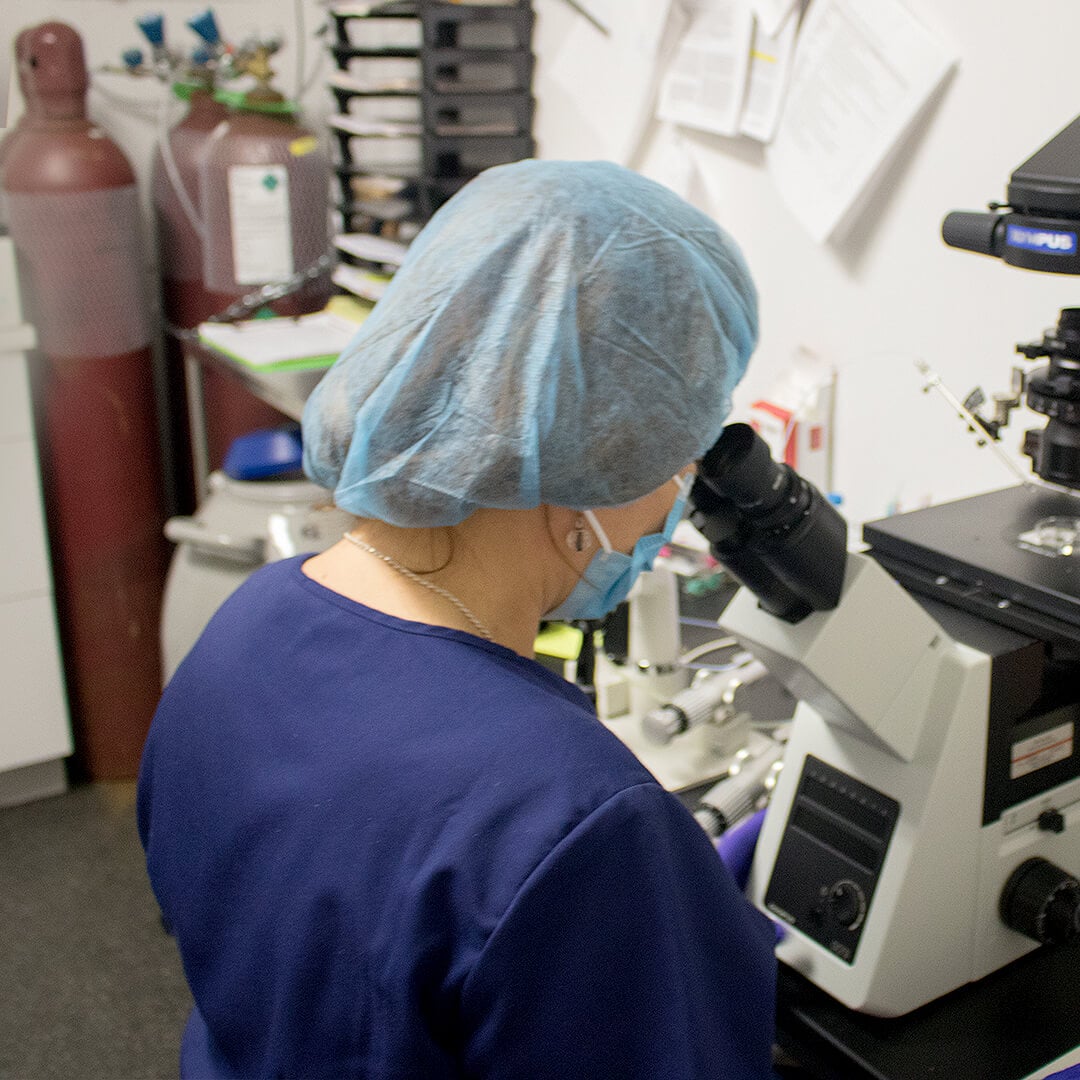
A male factor is present in nearly half of couples experiencing a delay in conceiving. Most of those cases are mild to moderate and are addressable with IUI or with ICSI during IVF. A semen analysis, performed at a fertility center with its own andrology laboratory, should be one of the first steps for any couple being evaluated.
How male fertility is evaluated
The primary test is a semen analysis, which evaluates sperm count (concentration), motility (how well sperm swim), and morphology (shape). Depending on results we may recommend hormone testing (testosterone, FSH, LH), genetic testing, or referral to a reproductive urologist for further evaluation.
What the numbers mean
WHO 6th edition (2021) reference values consider normal to be:
- Concentration — above 16 million sperm per millilitre
- Total motility — above 42%
- Progressive motility — above 30%
- Morphology (strict Kruger criteria) — above 4% normal forms
These are statistical lower reference limits drawn from fertile men, not a pass/fail line — a single result below one of them is not a diagnosis of infertility.
How a sample is collected
A two-to-five day abstinence window is the historical convention, but longer intervals tend to produce a poorer sample. Current evidence does not support prolonged abstinence, and frequent ejaculation has been shown to support motility while maintaining count. Follow whatever instruction your physician gives you for your own analysis. We can provide a home collection kit — the sample needs to reach the clinic within one hour and be kept at body temperature in transit.
Treatment options
ICSI is used for significant male-factor infertility, prior fertilization failure, and when using surgically retrieved sperm. In our practice we may also recommend it without a male-factor indication, because it ensures the sperm penetrates the egg and prevents polyspermy, which reduces the chance of an abnormal chromosome count. IUI may be appropriate when the male partner has a low sperm count or if the movement of the sperm (motility) is less than ideal. For mild abnormalities, IUI or IVF often addresses the fertility issue directly without requiring urology intervention.
Azoospermia and varicocele
Azoospermia means no sperm are found in the ejaculate. It's classified as obstructive (sperm are being produced but blocked) or non-obstructive (sperm production is impaired). In many cases sperm can be surgically retrieved from the testicle and used with IVF/ICSI, so azoospermia is not the end of the road. For meaningfully abnormal semen analysis results, azoospermia, a varicocele, prior groin surgery, or hormone abnormalities, referral to a reproductive urologist is often valuable — they may identify a correctable cause.
Paternal age
Sperm quality decreases around age 50 years, which is when male fertility starts to decline. Older paternal age is associated with modest increases in miscarriage risk, in certain rare single-gene conditions, and in some neurodevelopmental conditions including autism. The absolute increases are small.
Lifestyle and sperm health
The complete maturation process for sperm requires approximately three months. Consequently, sperm concentration, motility and function are affected by exposure to any factors that interfere with normal sperm maturation in the prior three months. Sperm regenerates roughly every 72 days, so changes to diet, weight, alcohol use, tobacco, marijuana, sleep, and heat exposure can measurably improve parameters within three months. Our lifestyle factors that affect sperm health resource covers this in detail. On a strict reading of the evidence, antioxidant supplements have not been shown to benefit men with abnormal semen parameters, including those with elevated sperm DNA fragmentation.
Preserving male fertility
Sperm can be frozen before chemotherapy, radiation, or gender-affirming procedures that would affect fertility. The process is straightforward, can typically be scheduled within days, and frozen sperm remains viable indefinitely. If you're facing a fertility-affecting treatment, do not wait to ask about fertility preservation.
More questions are answered in our male fertility Q&A, or contact Chelsea Fertility NYC to arrange an evaluation.