
The short answer: IUI is usually the first step, and IVF is the next one. IUI is a moderate treatment which simply places sperm in the reproductive tract. IVF makes sure the gametes are combined to achieve fertilization, and the embryo is replaced back in the uterus for implantation. In our practice we generally recommend moving to IVF after three unsuccessful IUI cycles with a favorable protocol. Some situations skip IUI entirely and begin with IVF — severe male factor, advanced endometriosis, tubal obstruction, advanced age, or poor ovarian reserve.
Your reproductive physician will counsel you on which program is best for your individual situation, so as not to lose time or build frustration in your journey to build a family. Each patient will have their own prognosis and customized management plan.
How IUI works
Intrauterine insemination is a relatively simple, non-surgical procedure, and only takes a few minutes to perform. It bypasses the cervix and places specially prepared sperm into the uterus around the time of ovulation, shortening the path that sperm would normally take to the fallopian tubes. A catheter is passed through the cervix and the washed semen sample is slowly injected. The process is quite painless; some women have experienced mild cramping, but this is rare.
IUI can be done in a natural cycle, with no fertility drugs necessary, or with oral or injectable medication to enhance or control ovulation.
Two requirements have to be met before IUI is an option:
- The woman being inseminated must have open fallopian tubes and ovulate (with or without medications).
- The sperm specimen must have at least one million motile sperm / cc.
How IVF works
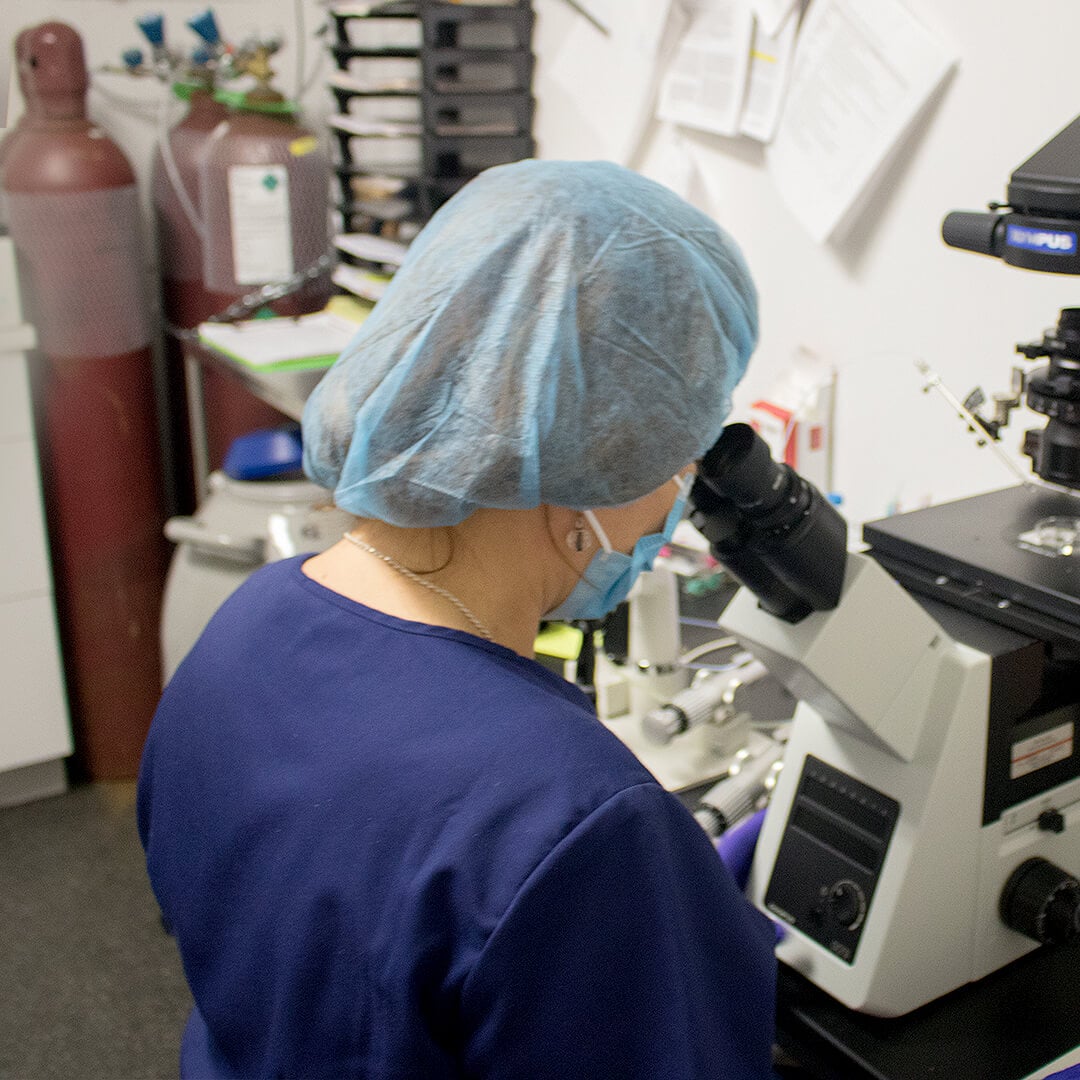
During IVF, eggs are retrieved from the ovaries and fertilized with sperm in a specialized laboratory rather than inside the fallopian tube. The resulting embryo is then carefully transferred to the uterus to achieve pregnancy. A cycle involves multiple steps, each at a specific time across a four to six-week period:
- Medications to grow multiple eggs; average 9-11 days
- Retrieval of eggs from the ovary or ovaries
- Insemination of eggs with sperm, fertilization, ICSI
- Culture of any resulting fertilized eggs (embryos) for several days (2-5 days)
- Placement ("transfer") of one or more embryo(s) into the uterus; procedure similar to IUI
- Support of the uterine lining with hormones to implant and sustain pregnancy
For a walk-through of what each step involves, see the IVF process, step by step.
When to move from IUI to IVF
Most practices, including ours, recommend moving to IVF after three unsuccessful IUI cycles with a favorable protocol. Continuing IUI beyond that rarely improves outcomes, and the cumulative time cost matters — especially when age is a factor.
How many cycles are appropriate is customized based on a patient's prognosis, age and other factors such as whether the sperm is frozen (thawed) or a fresh specimen. Importantly, an IUI failure does not make the patient a poorer prognosis for IVF to succeed.
When IVF is recommended first
IVF may be recommended immediately as a first step in treatment rather than after IUI. Such cases occur when there is severe male factor infertility or severe female factor infertility:
- Advanced endometriosis — one of the situations in which IVF may be recommended immediately as a first line of treatment
- Tubal obstruction — IUI requires open fallopian tubes, so a blocked tube rules it out
- Advanced age, or poor ovarian reserve
- Severe male factor infertility
Where sperm parameters are the limiting factor, ICSI — injecting a single sperm directly into the egg — is used during IVF and is the great equalizer for male factor infertility. If your workup has not identified a clear cause at all, see unexplained infertility.
Cost and insurance
Economic considerations can also influence the decision, as some insurance covers IUI, but not IVF. Our published pricing for both treatments, payment options and insurance guidance are on the financial page.
Common questions
How many IUI cycles should I try before moving to IVF?
Most practices, including ours, recommend moving to IVF after three unsuccessful IUI cycles with a favorable protocol. Continuing IUI beyond that rarely improves outcomes, and the cumulative time cost matters — especially when age is a factor.
Does a failed IUI cycle mean IVF is less likely to work?
An IUI failure does not make the patient a poorer prognosis for IVF to succeed.
Is IVF more likely to result in twins than IUI?
Multiple births are not related to IUI itself; they are more common when fertility drugs are used. IVF has a higher risk of multiple births only if multiple embryos are transferred.
It is important for patients to speak to their doctor at Chelsea Fertility NYC in order to begin a personalized treatment plan. Contact Chelsea Fertility NYC to get started.